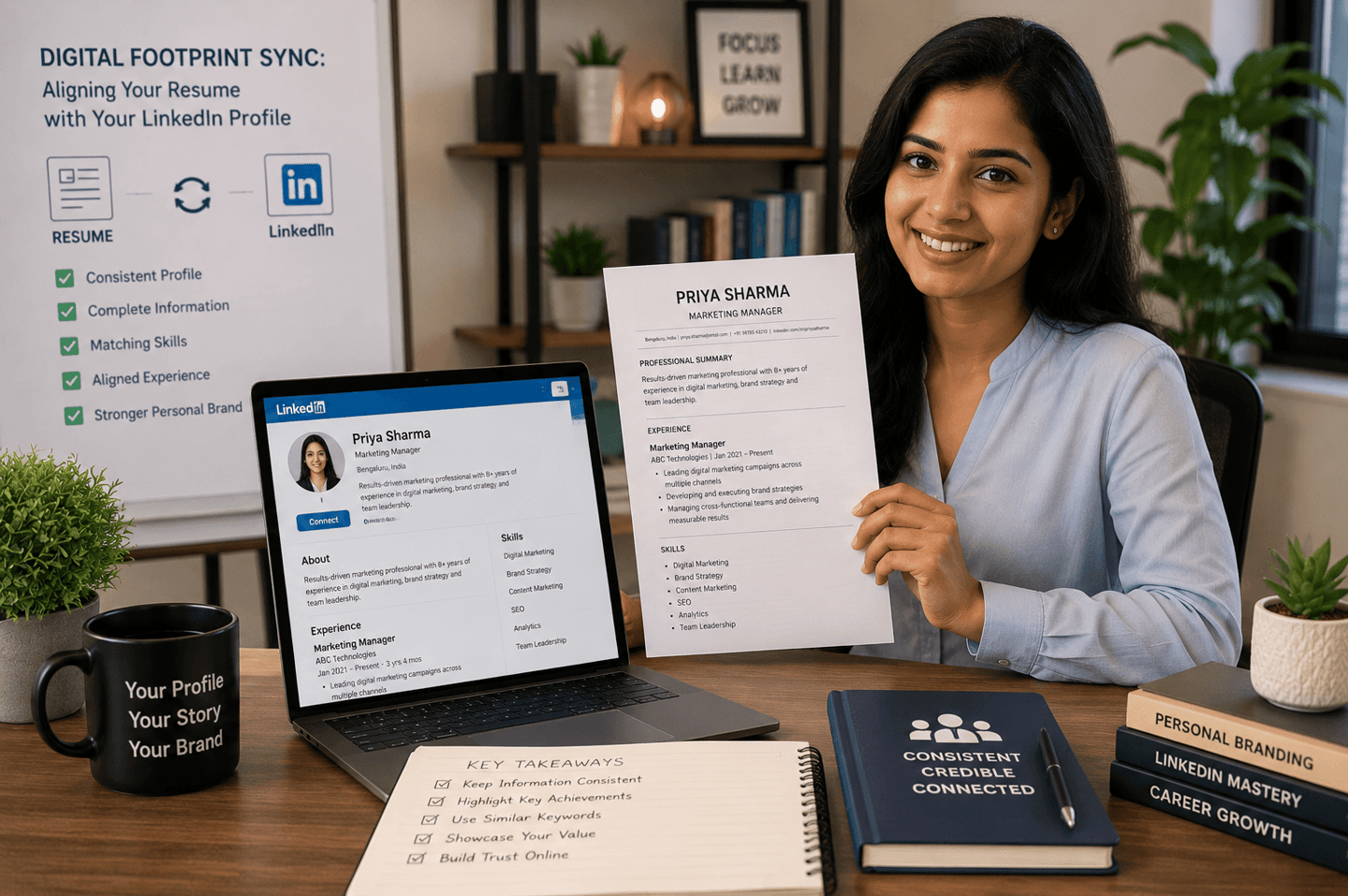
Digital Footprint Sync: Aligning Your Resume with Your LinkedIn Profile
Discrepancies between a candidate’s submitted resume and their public LinkedIn profile are an immediate red flag for corporate background verification teams. This guide outlines how to synchronize core employment milestones while strategically diverging your content to encourage profile clicks and build narrative depth.
RESUME WRITING
Updated 8 July 2026
7/8/20264 min read
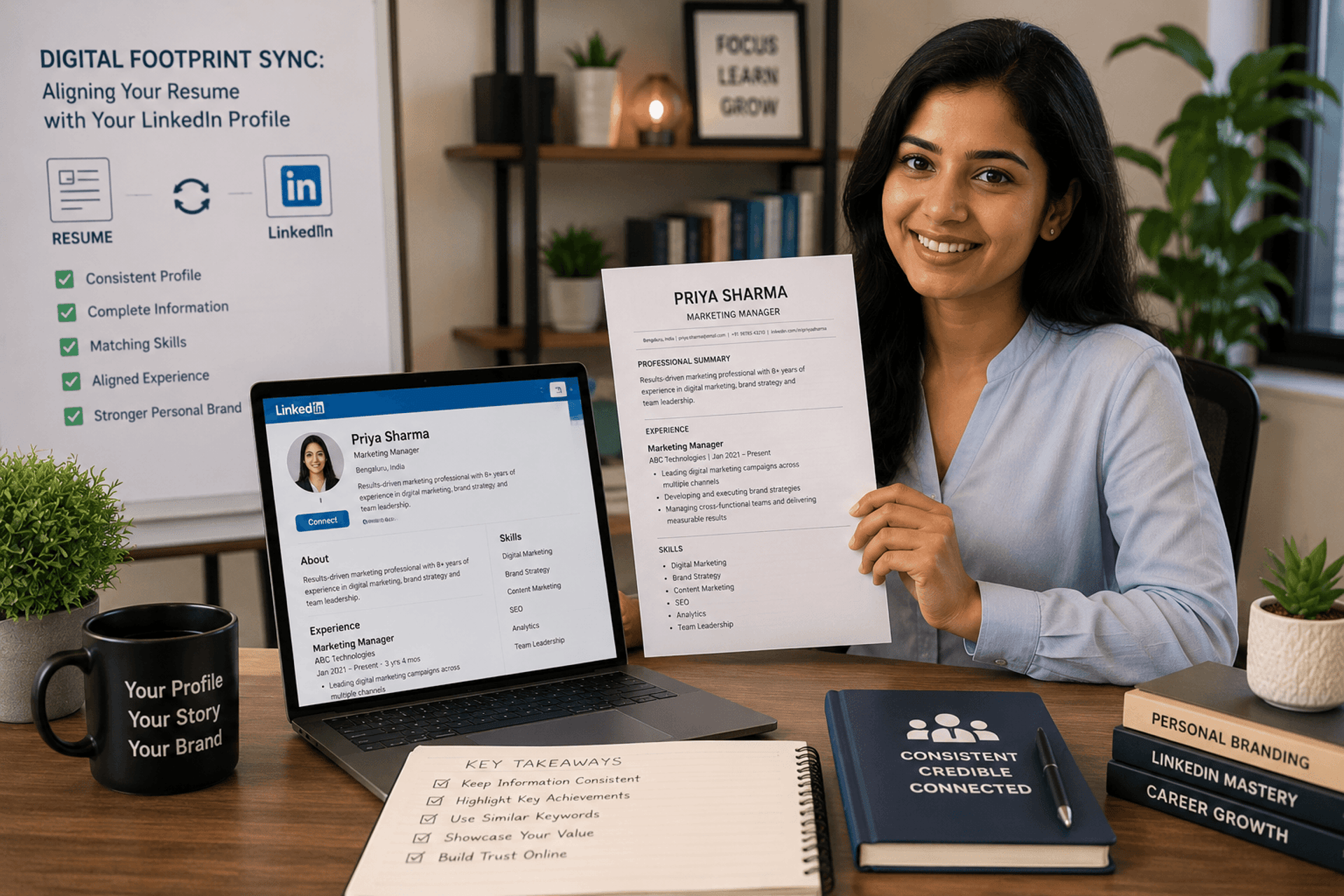
Sync Your LinkedIn Profile

Introduction
Your resume does not exist in a digital vacuum. The moment your document clears an automated applicant tracking system and lands in front of a human recruiter, their very next step is to verify your identity online. In almost every corporate scenario, this means searching for your LinkedIn profile.
A major point of failure for many applicants is maintaining inconsistent timelines, varying company names, or conflicting job titles across these two platforms. If your resume states you were a "Senior Lead Consultant" but your LinkedIn profile lists you as an "Associate," an executive reviewer will immediately question your professional credibility. To protect your digital footprint, you must treat your resume and your LinkedIn profile as a coordinated, multi-layered personal brand.
The Core Convergence vs. Divergence Model
Synchronizing your profiles does not mean copying your resume text and pasting it directly into your LinkedIn profile fields. A text-dense LinkedIn profile reads like an unedited data dump and fails to engage casual profile visitors. Instead, follow a structured framework that keeps your facts perfectly aligned while allowing your narratives to diverge.
1. What Must Align Perfectly (The Verification Layer)
Your core professional facts must match down to the exact details. Any differences here will trigger compliance alerts during background checks.
Company Names & Locations: Ensure the corporate entities match your formal contracts.
Employment Timelines: If your resume states an employment window ran from "Mar 2022 – Jan 2025," your LinkedIn profile must show those exact months and years.
Official Job Titles: Use your verified corporate designations to ensure consistency across both platforms.
2. Where You Should Diverge (The Engagement Layer)
Your resume is a private, formal document optimized for a single target role. Your LinkedIn profile is a public, multi-dimensional platform built for networking, industry visibility, and brand building.
The Tone Shift: While your resume uses a strict, third-person objective voice (no pronouns), your LinkedIn profile should use an approachable, first-person narrative ("I am an operations builder...") to drive human engagement.
Multimedia Portfolio Integration: Use LinkedIn's features to link directly to live product videos, published white papers, or public slide decks that would clutter a clean resume layout.
Optimizing the LinkedIn Profile Architecture
To complement a highly targeted resume, your LinkedIn profile should focus on broad discoverability and industry authority, ensuring it functions as an effective landing page.
The Keyword Headline: Do not simply list your current job title as your headline (e.g., Manager at Enterprise Corp). Expand it to include high-priority functional keywords.
Advanced Architecture: "Manager - Global Talent Acquisition | Tech Sourcing Specialist | Employer Branding Expert"
The "About" Narrative: Use your LinkedIn summary to tell a broader career story. Spend the first paragraph outlining your industry focus, the second highlighting a major career milestone, and close with a list of your core technical skills to optimize your profile for internal search algorithms.
The Recommendations Protocol: Public social proof adds significant credibility to your profile. Actively request short recommendations from former managers, cross-functional partners, or clients.
Harmonizing Public Professional Persona with Custom Application Documents
Discrepancies between your submitted resume and your public LinkedIn profile trigger immediate red flags for corporate investigators and background verification teams. This guide outlines how to build a unified digital footprint, ensuring that your public timeline mirrors your tailored applications without losing individual nuance.
Key Benefits of This Strategy
Prevents Verification Red Flags: Synchronizing critical data landmarks—such as core company names, employment dates, and educational credentials—removes friction during background checks and recruiter cross-examinations.
Maximizes Inbound Discovery Potential: Optimizing your public profile with foundational, industry-wide industry keywords ensures that your page works as a passive candidate-generation asset while your resumes target specific mandates.
Tactical Protocol: Do's and Don'ts
Follow this strict digital footprint synchronization checklist to protect your professional credibility:
Profile Alignment & Guardrails
✅ DO run a comprehensive side-by-side audit of your master resume and your LinkedIn profile to eliminate any conflicting dates or titles.
✅ DO turn off your LinkedIn network notification settings before making major structural edits to your profile to avoid alerting your current employer.
❌ DON'T use inflated, creative job titles on your resume that differ substantially from the verified roles listed on your public profiles.
❌ DON'T leave your LinkedIn profile URL uncustomized; clean up your profile settings so it reads as a simple string (e.g., linkedin.com/in/firstname-lastname).
Content Strategy & Integrity
✅ DO feature your customized LinkedIn URL clearly within the top-fold contact header of your resume template.
✅ DO ensure the skills listed in your resume's core competencies directory match the top skills you highlight on your public profile.
❌ DON'T publish confidential company data, sensitive project metrics, or proprietary tool names on your public LinkedIn page.
❌ DON'T let your public profile fall behind your active resume updates; ensure your professional history remains current across both channels.
_____________________________________________________________________________________________
RESUME & COVER LETTER WRITING
Digital Footprint Sync: Aligning Your Resume with Your LinkedIn Profile
Managing the data relationship between your private application documents
and your public professional profile.
Conclusion
Managing your digital footprint ensures that when a recruiter transitions from your resume to your LinkedIn profile, they find a consistent, professional narrative. Aligning your core employment metrics builds instant trust, while adapting your tone for each platform allows you to engage human reviewers effectively. Once your digital presence is completely synchronized, your next priority is learning how to bypass public application gates entirely by writing high-impact outreach messages.
Our next article explores this networking strategy: The Referral Blueprint: How to Write Cold Outreach Messages That Get Your Resume Read.
Related Articles
JobPark India © 2026 | All Rights Reserved
_____________________________________________________________________________________________________________________________________________
JobPark
"Empowering India's Workforce Journey"
JobPark is a free career guidance platform focused on practical, India‑specific workplace insights. We help students, job seekers, and professionals navigate career growth, workplace practices, and skill development with clarity, confidence, and real‑world relevance.
Career Journey
Quick Links
Career Support
🌟 Free forever. No strings. Just JobPark.
Career Resources Directory