Creative vs. Traditional Frameworks: Selecting Layouts by Industry Sector
Visual presentation creates an immediate psychological impression before a recruiter reads a single word. This guide breaks down when to deploy conservative, traditional resume structures and when to opt for modern, minimalist alternatives, ensuring your layout matches your industry's standards without breaking machine readability.
RESUME WRITING
Updated 8 July 2026
7/8/20263 min read

Introduction
The visual design of your resume functions as a silent signal of your industry awareness. A major error made by many applicants is selecting a resume template based entirely on personal aesthetic taste rather than the specific cultural standards of their target domain.
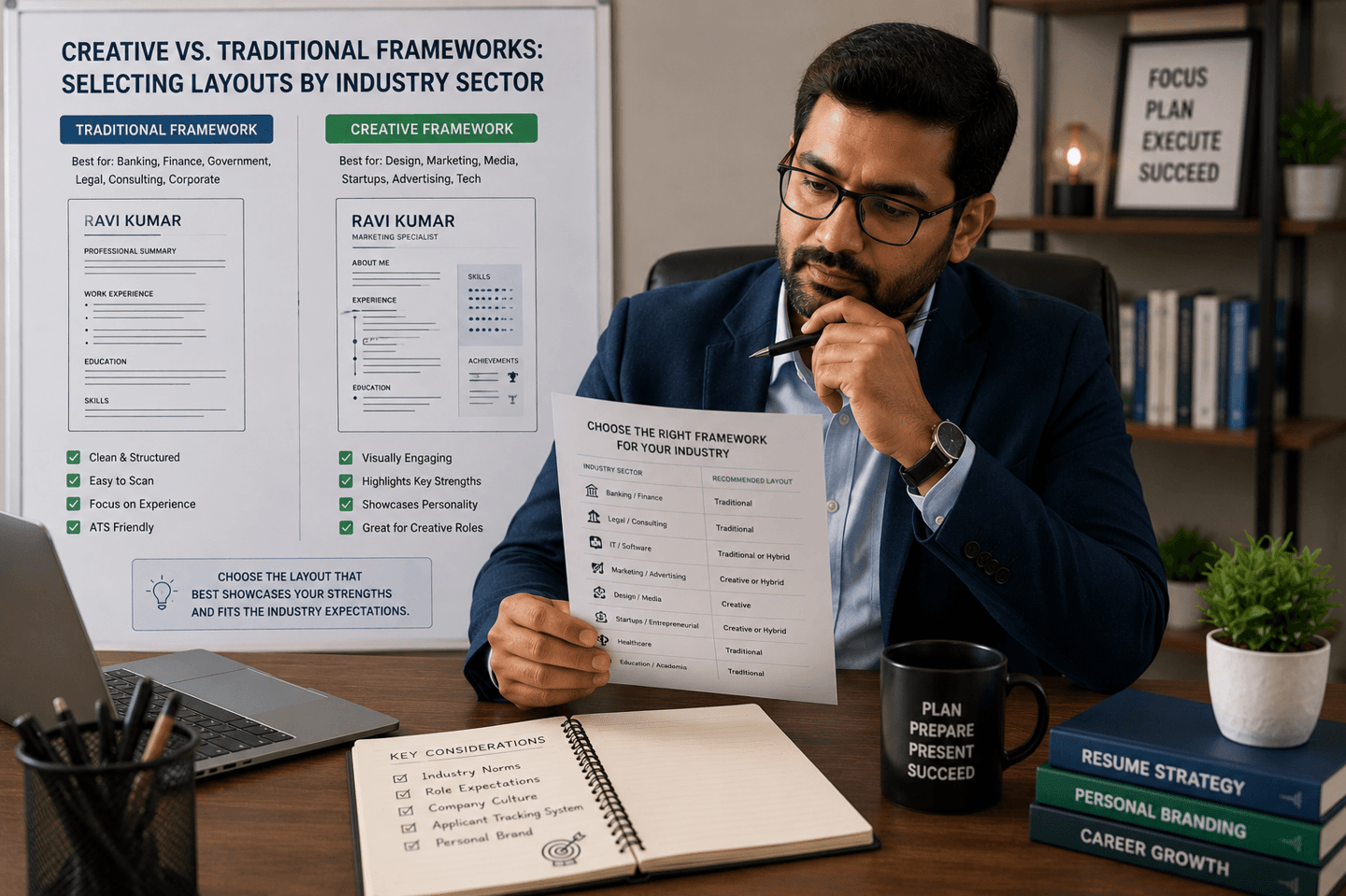
Submitting a highly stylized template with colorful sidebars to a conservative investment bank signals a lack of professional discipline. Conversely, presenting a rigid, text-dense layout to an early-stage consumer tech startup can make you look slow or disconnected from modern product cultures. Aligning your layout design with your specific industry ecosystem ensures your profile instantly looks the part.
The Layout Spectrum: Mapping Aesthetics to Sectors
To choose the right visual framework, look at where your target industry sits on the spectrum of corporate formality.
1. The Traditional Framework (Formal Sectors)
This structure relies on a strict, single-column chronological grid with centered headers and traditional Serif typography (like Garamond or Georgia). It values absolute simplicity, text density, and historical transparency above all else.
Target Sectors: Investment Banking, Management Consulting, Corporate Law, Defense, Asset Management, and Traditional Public Sectors.
2. The Modern Minimalist Framework (Tech & Agile Sectors)
This layout updates traditional design rules by using clean Sans-Serif fonts (like Arial or Helvetica), left-aligned headers, and tight vertical padding. It may use a single dark secondary accent color (like deep navy blue) restricted strictly to section titles to improve readability.
Target Sectors: Software Engineering, Consumer Internet, Product Management, FinTech, SaaS Startups, Data Analytics, and Venture Capital.
3. The Creative Core Framework (Visual Sectors)
For roles where visual output is the core product, the resume itself acts as an early portfolio piece. While it must still preserve clean text vectors for automated parsers, it can feature distinctive typographic choices, custom section dividers, and more prominent links to live digital media assets.
Target Sectors: Brand Advertising, Architecture, User Experience (UX) Design, Fashion Branding, Creative Copywriting, and Fine Arts.
Evaluating Layout Risks: Automated vs. Human Scans
While a creative layout can help you stand out in certain fields, it introduces technical risks that must be managed carefully.
Matching Document Design Aesthetics with Sector-Specific Recruiter Expectations
Applying with a flashy, multi-colored graphic design layout to a conservative financial institution can cause immediate rejection, just as an unstyled, plain-text profile might fail to capture attention in an avant-garde design agency. This guide provides an operational roadmap for choosing the exact level of design flair, typography, and structure that aligns with your specific industry ecosystem.
Key Benefits of This Strategy
Ensures Immediate Cultural Alignment: Matching the visual style of your document to the industry's workplace culture establishes immediate professional credibility with the hiring team.
Protects Design Readability Across Platforms: Choosing clean layouts for corporate fields keeps automated tracking engines running smoothly, while selected styling elements help you stand out in creative sectors.
Tactical Protocol: Do's and Don'ts
Follow this strict design validation checklist to protect your professional presentation across all application channels:
Design & Typography Selection
✅ DO select your layout based on the operational nature of the target role rather than your personal artistic preferences.
✅ DO use a clean, universally supported system font to guarantee your text renders correctly on any computer.
❌ DON'T use multi-column templates or split-screen layouts if you are applying through large corporate job portals.
❌ DON'T include your photograph, skills rating scales, or visual percentage bars, regardless of the industry style.
Color & Spatial Geometry
✅ DO ensure your text maintains a high-contrast ratio (pure black text on a clean white background is the safest standard).
✅ DO use thin, clean horizontal rules to separate major blocks of information and keep the page organized.
❌ DON'T use more than one accent color on your page; keep your choices restricted to dark charcoal or deep navy.
❌ DON'T crowd your page edge-to-edge with text; preserve intentional white space to make scanning easier.
_____________________________________________________________________________________________
RESUME & COVER LETTER WRITING
Creative vs. Traditional Frameworks: Selecting Layouts by Industry Sector
Aligning the visual aesthetic of your resume with the cultural
expectations of your target market.
Conclusion
Choosing the right resume framework is a calculated branding decision that demonstrates your understanding of your industry's culture. By matching your layout to the formality of your target sector, you ensure your first impression matches recruiter expectations. Once you select the ideal layout for your industry, your next priority is learning how to present your experience with executive weight if you are positioning yourself for senior leadership roles.
Our next article explores this senior framing process: Executive Presence on Paper: Framing Leadership Scale for Senior Roles.
Related Articles
JobPark India © 2026 | All Rights Reserved
_____________________________________________________________________________________________________________________________________________
JobPark
"Empowering India's Workforce Journey"
JobPark is a free career guidance platform focused on practical, India‑specific workplace insights. We help students, job seekers, and professionals navigate career growth, workplace practices, and skill development with clarity, confidence, and real‑world relevance.
Career Journey
Quick Links
Career Support
🌟 Free forever. No strings. Just JobPark.
Career Resources Directory